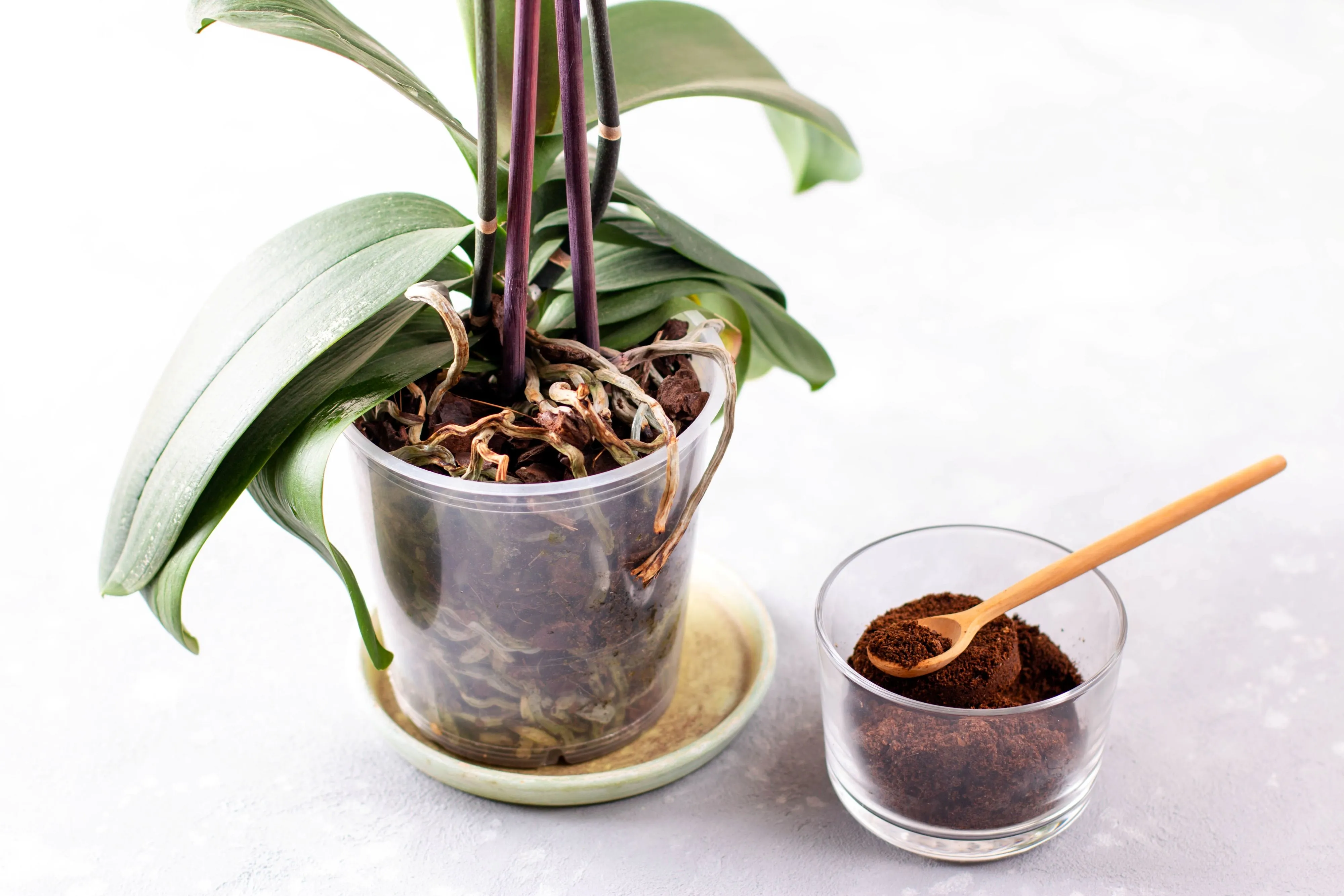
- Orchids lack the enzymes and microbes to break down coffee grounds into usable nutrients.
- Coffee grounds suffocate roots, causing rot and depleting nitrogen needed for growth.
- Use specialized orchid fertilizers, diluted fish emulsion, or compost tea to properly feed your plants.
The idea of recycling coffee grounds as fertilizer feels like a win-win. We get our morning jolt, and our plants get a nutrient boost. We feel eco-friendly by reusing coffee grounds as a soil amendment for plants instead of just trashing them. However, when it comes to orchids, coffee grounds can cause big problems because of the way these plants work.
Here is why you should keep coffee grounds far away from your orchids, plus better options for providing necessary nutrients.
Why Orchids Can’t Use Coffee Grounds
Orchids are epiphytes, meaning they grow on other plants in the wild, typically trees. They evolved to collect ready-to-use nutrients that wash past them in rainwater. They lack the root enzymes or the symbiotic relationship with specific soil bacteria required to break down complex organic matter like coffee grounds.
For coffee grounds to release their nitrogen, phosphorus, and potassium, they must first be processed by soil microbes. In a garden or compost pile,these microbes are abundant. They break down the grounds into nutrients into a form that plant roots can absorb.
In an orchid pot, however, these beneficial microbes aren’t present in high enough numbers. That’s because orchids live in sterile bark or moss with high airflow. Because the orchid can’t break the grounds down, the nutrients remain chemically locked inside the organic material.
Even worse, the process of trying to decompose those grounds can deprive your orchid of nutrients. Bacteria that break down carbon-heavy materials like coffee require nitrogen to do their work. Coffee grounds in your orchid’s pot are likely to pull nitrogen out of the potting media to fuel their decomposition process, leaving your plant with a deficiency.
Related
Other Problems Coffee Grounds May Cause
Besides causing nutrient issues, coffee grounds can create conditions that make life harder for your orchids while attracting undesirable guests.
- Root rot: Orchids need large air gaps around their roots in the potting medium. Coffee grounds settle into these gaps, creating a layer that suffocates the roots and leads to root rot.
- Pests: Coffee grounds also attract fungus gnats.These pesky insects love the damp, decaying environment provided by wet grounds.
- Mold: Wet grounds are an ideal substrate for mold. In the humid environment orchids prefer, a layer of coffee grounds can become a fuzzy, gray carpet in a matter of days, which can spread to the plant’s crown.
How to Feed Your Orchid
To provide essential nutrients to an orchid, these are the best options that won’t harm the plant:
- Orchid fertilizer: Buy a commercial fertilizer blended especially for orchids.
- <strong>Fish emulsion</strong>: This is an organic fertilizer option that provides nitrogen in a form that orchid roots can grab immediately. Make sure to use it in a highly diluted form, 1 teaspoon to 1 gallon of water.
- Compost tea: Either commerically prepared or homemade compost tea contains nutrients in the simple form orchids can use.
A Better Way to Use Coffee Grounds for Orchids
If you want to use coffee to benefit your orchids and other plants, composting the grounds first is key. Adding your grounds to a traditional compost bin counts as a “green” ingredient that needs to be balanced with “brown” materials such as shredded dry leaves. The natural decomposition process breaks down the caffeine and balances the pH.
Once those grounds have turned into rich compost, steep a small amount of compost (1/2 to 1 cup compost to 1 gallon of water) to create a gentle, balanced compost tea that is much safer for sensitive epiphytes than compost or straight grounds.
- <span>Gardening</span>
- <span>Houseplants</span>
- <span>Caring for Houseplants</span>
"Orchid Supplement... or Snake Oil?" St. Augustine Orchid Society.